
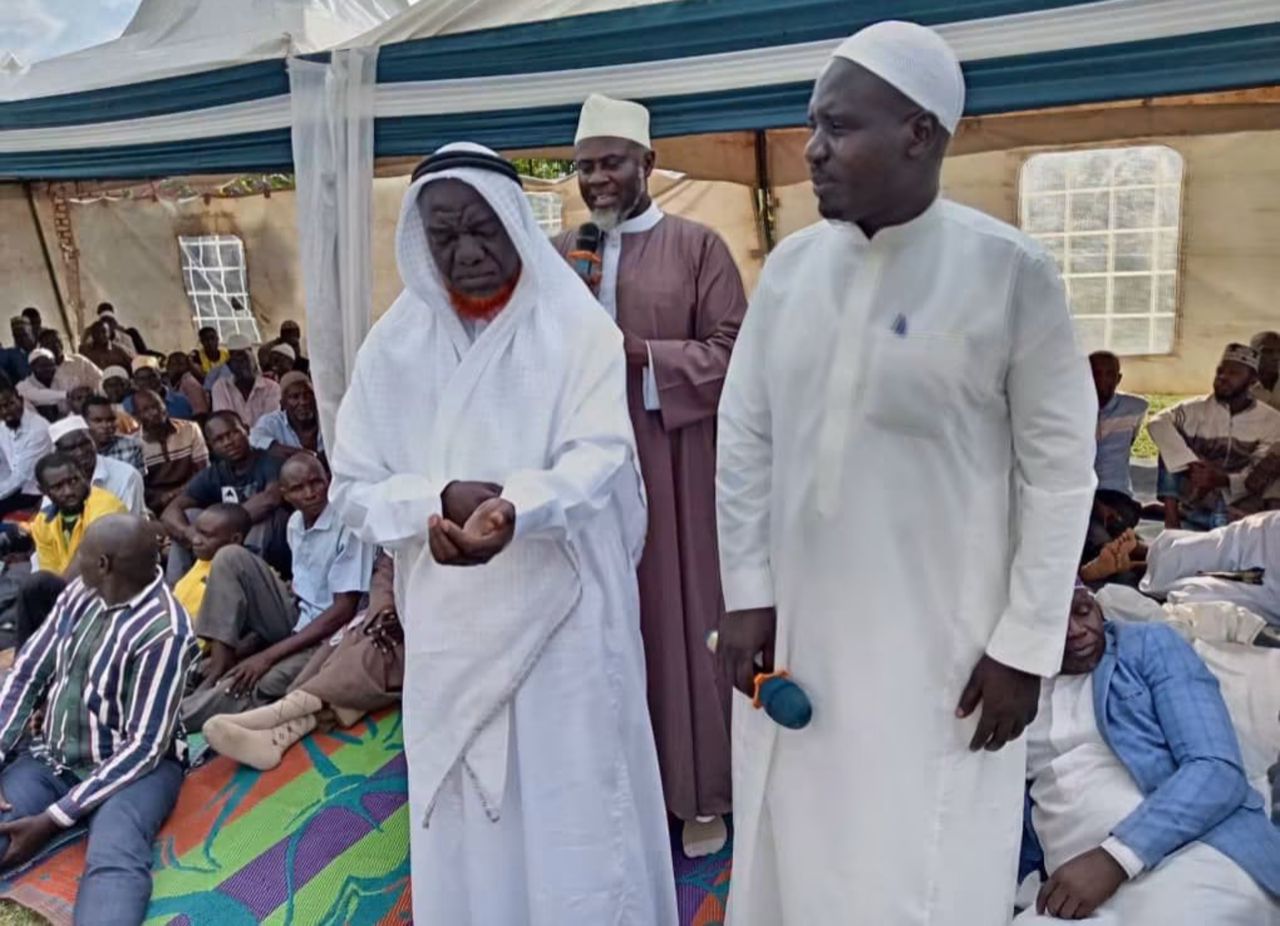
The Uganda Muslim Supreme Council (UMSC) has called for stronger coordination and unity in the management of Hajj affairs as discussions with government continue on reforms aimed at improving Uganda’s pilgrimage systems.
The call was made by the Regional Assistant to the Mufti for Eastern Uganda, Dr Sheikh Ahmad Hamid Wandenga, while officiating as chief guest at a thanksgiving ceremony for returning pilgrims Haji Twaha Nabirere and Hajjat Mariam Wagogo in Sironko Town Council.
Representing the Mufti of Uganda, His Eminence Dr Sheikh Shaban Ramadhan Mubaje, Sheikh Wandenga said effective collaboration between government and UMSC remains essential for the smooth facilitation of pilgrims travelling to the holy sites.
He said reforms currently under discussion are expected to strengthen future Hajj operations and improve services offered to Ugandan pilgrims.
“Every Muslim has the potential to perform Hajj, but intention and commitment remain key,” Sheikh Wandenga said, urging Muslims to make early spiritual, financial and logistical preparations for the pilgrimage.
He noted that while many Muslims qualify to undertake Hajj, a lack of preparedness and commitment often prevents them from fulfilling the religious obligation.
Sheikh Wandenga also commended ongoing efforts to strengthen institutional coordination within UMSC, saying unity among Muslim leaders and stakeholders is critical to improving pilgrimage management systems across the country.
The ceremony attracted a number of political, religious and community leaders. During his remarks, Sheikh Wandenga expressed appreciation for government support towards annual pilgrimages, particularly acknowledging President Yoweri Museveni and other leaders who have contributed to facilitating the exercise.
However, he raised concerns about what he described as inconsistencies in the implementation of some government enforcement programmes, arguing that certain measures have negatively affected small-scale business operators.
He cited the Parish Development Model (PDM), under which beneficiaries receive Shs1 million in seed capital, but noted that some beneficiaries later lost their sources of income following enforcement operations that led to the demolition of business structures.
Sheikh Wandenga also referred to enforcement measures implemented during the COVID-19 lockdown period, calling for a more balanced and practical approach to the implementation of government directives.
The Secretary for Hajj and Umrah at UMSC, Sheikh Ali Shiwuyo, encouraged Muslims to register early for pilgrimage, saying many eligible believers postpone the journey despite having the means to undertake it.
“Many of you can go for Hajj but don’t want to go. Kindly register and we arrange for you to go,” Sheikh Shiwuyo said.
He also commended pilgrims for utilising UMSC coordination structures, saying they help ensure smooth travel arrangements and proper guidance throughout the pilgrimage process.
Speaking at the event, Haji Twaha Nabirere shared his personal journey towards fulfilling his dream of performing Hajj, a goal he said he first pursued in 1981.
He recounted years of illness, financial hardships and administrative challenges, including difficulties related to an expired passport, before finally completing the pilgrimage together with his wife.
Nabirere expressed gratitude to family members, friends and well-wishers who supported him throughout the journey, saying perseverance, patience and faith enabled him to realise a lifelong aspiration.
The thanksgiving ceremony served as both a celebration of the returning pilgrims and a platform for religious leaders to advocate for improved pilgrimage management and greater participation in one of Islam’s most important obligations.
